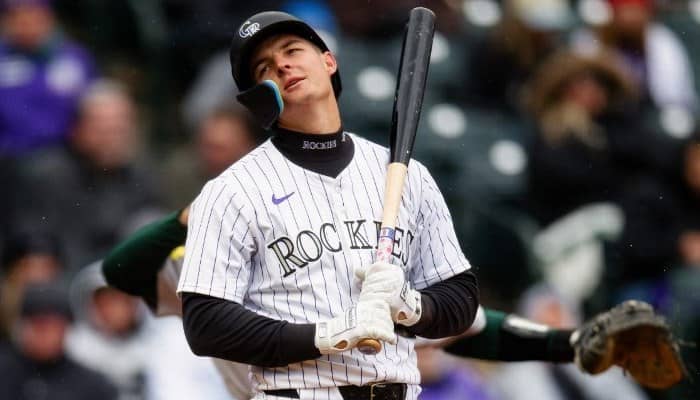
In the world of professional sports, there is bad, and then there is historically bad. Just one season after the Chicago White Sox endured a campaign of modern-day infamy, the 2025 Colorado Rockies are making a harrowing case to claim the title of baseball’s most dysfunctional organization. On the surface, both teams represent the nadir of on-field performance, but a deeper analysis reveals why the Rockies’ current free fall feels fundamentally worse and more hopeless.
It is a story that goes beyond a simple win-loss record. It is a tale of organizational rudderlessness, a flawed rebuilding strategy, and a brutal competitive environment that have combined to create a perfect storm of failure. While the White Sox embarked on a clear, albeit painful, path to reconstruction, the Rockies appear to be on a winding road to nowhere, destined to become a cautionary tale in modern sports management.
The Leadership Vacuum: A Tale of Two Dugouts
The role of a manager for a struggling team is one of the most challenging in sports. They must maintain morale, develop young players, and be the public face of constant defeat. Both the 2024 White Sox and 2025 Rockies ultimately fired their managers mid-season, but the circumstances surrounding these dismissals tell very different stories. The White Sox’s firing of Pedro Grifol felt like an act of “addition by subtraction.” There was a palpable disconnect between Grifol, his players, and the media, and his departure cleared the way for the organization to bring in a promising new manager in Will Venable and a new general manager in Chris Getz to steer a clearly defined rebuild.
In contrast, the Rockies’ dismissal of Bud Black was a far more somber affair. Black, who had been with the team since 2017 and led them to the postseason in his first two years, was a respected veteran manager. His firing felt less like a necessary strategic change and more like a respected figure falling on the sword for the deep-seated incompetence of the organization above him. While third-base coach Warren Schaeffer has taken over on an interim basis, the managerial job in Colorado is now one of the least attractive in all of professional sports. Unlike the White Sox, who could sell a vision of a new beginning to their next manager, the Rockies can only offer a thankless task with little organizational support, talent, or a discernible plan for improvement.
A Flawed Rebuild: The Peril of Inaction
The most significant difference between the two historically bad teams lies in their rebuilding philosophy. The 2024 White Sox, under their new front office, immediately embraced a full-scale, painful teardown. They were aggressive in the trade market, moving any and all valuable veteran players—like Tommy Pham, Michael Kopech, and later, All-Star pitcher Garrett Crochet—for prospect capital. Their strategy was clear: accumulate as much young talent as possible and endure the short-term pain for the chance of long-term gain. It was a difficult process for their fans, but it was a coherent plan.
The Colorado Rockies, on the other hand, have been defined by a crippling inaction. Their most valuable and tradable asset for the past few seasons has been third baseman Ryan McMahon, a productive player on a team-friendly contract. Contending teams were interested, but the Rockies chose to hold onto him. With each passing season, as McMahon’s performance has declined, his trade value has plummeted. This failure to capitalize on their few assets has left them in a perilous position. Unlike the White Sox, who could offer intriguing trade pieces to playoff contenders, the Rockies’ roster is now largely composed of young, pre-arbitration players still finding their way in the league. Their two best players, shortstop Ezequiel Tovar and center fielder Brenton Doyle, are young cornerstones they are highly unlikely to trade. The result is a roster with almost nothing of value to offer other teams, leaving them with no clear path to acquire the impact prospects needed to fuel a rebuild.
A Barren Farm and a Brutal Division
A successful rebuild is not just about tearing down the major league roster; it is about building up a pipeline of talent in the minor leagues. Here again, the Rockies’ future looks bleak. Their farm system is widely regarded as one of the weakest in baseball, with very few high-impact prospects on the verge of reaching the majors. Last season’s top draft pick is still in the low levels of the minors, and their top pitching prospect has already been called up and is currently injured. There is simply no wave of talent coming to rescue the big-league club in the near future.
This internal weakness is exacerbated by an incredibly hostile external environment. The National League West is a gauntlet. It features two perennial World Series contenders in the Los Angeles Dodgers and San Diego Padres, and two other strong playoff hopefuls in the San Francisco Giants and Arizona Diamondbacks. The Rockies are not just a bad team; they are a bad team trapped in arguably the toughest division in all of baseball. They are currently 3-13 against their divisional foes, and as those other teams inevitably strengthen at the trade deadline, the second half of the season promises to be a long and brutal ordeal. This combination of internal ineptitude and external competitive ferocity is the recipe for a truly historic level of losing, with the Rockies currently on pace to finish with a staggering 136 losses—a full 15 games worse than the historically bad 2024 White Sox.
A Winding Path to Nowhere
While every sports fan understands that rebuilding cycles are a necessary part of team sports, the situation in Colorado feels different. It feels less like a cycle and more like a permanent state of being. The 2024 White Sox were a team with a clear problem and a clear, if painful, solution. The 2025 Colorado Rockies are a team with a multitude of problems and no discernible plan to solve any of them. They lack leadership, they lack a coherent strategy, they lack tradable assets, and they lack a pipeline of future talent. Trapped in a division of sharks, this rudderless ship is not just sinking; it is in a free fall, destined to become the new, unfortunate benchmark for modern baseball infamy.