In the intense, high-stakes environment of the NBA Finals, every possession is precious. While jaw-dropping dunks and clutch three-pointers often steal the headlines, the gritty, thankless work on the glass is frequently what separates champions from runners-up. Rebounding is the art of creating second chances and denying them to the opponent, a battle of will, positioning, and pure effort. When you examine the history books, the single-game rebounding records from the NBA Finals feel like they belong to a different sport entirely.
These monumental achievements were set in a bygone era, dominated by legendary titans who controlled the paint with an iron will. This deep-dive analysis explores the top individual rebounding performances in NBA Finals history, the stories behind these incredible feats, and why these records are likely to remain untouched forever.
The Titans of the Glass: An Unbreakable Era of Dominance
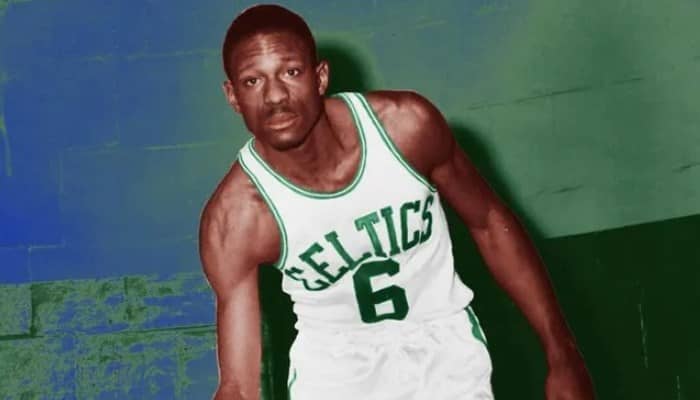
Before diving into the specific games, it’s crucial to understand the context of the era in which these records were set. The single-game rebounding leaderboard for the NBA Finals is utterly dominated by two names: Bill Russell and Wilt Chamberlain. They alone account for the vast majority of the most prolific rebounding games in Finals history. This level of dominance is a product of a fundamentally different style of basketball. The game in the 1960s was played at a much faster pace, with significantly more field goal attempts per game. In the 1962 Finals, for example, the Celtics and Lakers averaged over 115 shots per game each. Compare that to the modern era, where teams often average in the high 80s or low 90s. More shots, and importantly, more missed shots, created a wealth of rebounding opportunities that simply don’t exist in today’s more efficient, three-point-oriented game.
Furthermore, the role of the center was completely different. The giants of the 60s were tasked with anchoring the defense, protecting the rim, and controlling the paint. They rarely strayed far from the basket, placing them in a prime position to gobble up rebounds on both ends of the floor. The modern game, with its emphasis on floor spacing and “small ball” lineups, often pulls centers away from the basket, diminishing their rebounding totals. It is within this historical context that the following performances transcend statistics and become legendary tales of athletic dominance.
1. Bill Russell’s Game 7 Masterpiece (40 Rebounds, 1962)
There is no greater pressure in professional basketball than a winner-take-all Game 7 of the NBA Finals. On April 18, 1962, Bill Russell delivered what is widely considered the greatest rebounding performance in the history of the sport, under the brightest possible lights. In a classic, hard-fought battle between the arch-rival Boston Celtics and the Los Angeles Lakers, Russell was a man possessed. He played all 53 minutes of the overtime thriller, scoring 30 points and pulling down an astounding 40 rebounds to lead his Celtics to a 110-107 victory and their fourth consecutive NBA championship.
This was not a case of padding stats against an inferior opponent. He was battling against a Lakers frontline that featured the legendary Elgin Baylor, who had a remarkable 22 rebounds of his own in that same game. The game was a tense, back-and-forth affair, with the Lakers’ Frank Selvy famously missing a potential championship-winning shot at the end of regulation. In the crucial overtime period, it was Russell’s dominance on the glass that secured the victory for Boston, limiting the Lakers to a single shot on most possessions while creating extra opportunities for his own team. This performance is the ultimate testament to his championship DNA—a display of unparalleled will, endurance, and dominance when it mattered most. It remains the single-game record for rebounds in a Finals game, a mark that will almost certainly never be broken.
2. The First Forty: Russell’s Early Warning Shot (40 Rebounds, 1960)
While his Game 7 masterpiece in 1962 is his most famous rebounding performance, it was not the first time Bill Russell had reached the 40-rebound plateau in the NBA Finals. Two years earlier, on March 29, 1960, he provided a preview of his incredible prowess on the boards in Game 2 of the Finals against the St. Louis Hawks. In another display of relentless energy, Russell grabbed 40 rebounds, setting the Finals record for the first time.
Interestingly, despite Russell’s individual heroics, the Celtics actually lost this game 113-103. The Hawks, led by their own Hall of Fame big man Bob Pettit, were the Celtics’ primary rival in this era, and the series was a grueling, seven-game affair. Russell’s performance in a losing effort only serves to highlight his consistent, night-in, night-out dominance. It proved that regardless of the game’s outcome, he was going to be the single most impactful force in the paint. This 40-rebound game was an early warning shot to the rest of the league, a clear declaration that the paint belonged to him. It set a standard of excellence that he would meet again on an even bigger stage two years later.
3. Wilt Chamberlain’s Statement (38 Rebounds, 1967)
For much of the 1960s, Wilt Chamberlain was the unstoppable individual force to Bill Russell’s ultimate team winner. However, in 1967, Chamberlain finally broke through, leading his Philadelphia 76ers past Russell’s Celtics in the Eastern Division Finals and ending their historic streak of eight consecutive championships. In the NBA Finals that year against the San Francisco Warriors, Chamberlain delivered a rebounding performance that solidified his status as one of the all-time greats.
In Game 2 of the series, on April 16, 1967, Chamberlain was a force of nature, pulling down an incredible 38 rebounds to go along with 10 points and 10 assists in a dominant 126-95 victory. This was part of a conscious evolution in his game. Under the guidance of coach Alex Hannum, Chamberlain had transformed from a pure, high-volume scorer into a more complete, team-oriented player, focusing on defense, passing, and rebounding. This 38-rebound effort, against another legendary center in Nate Thurmond, was a perfect example of his newfound focus. He was not just scoring; he was controlling every aspect of the game. The 76ers would go on to win the championship in six games, giving Chamberlain his first NBA title and providing a fitting end to one of the most dominant individual seasons in league history.
4. The Warriors’ Wall: Chamberlain’s Second 38-Rebound Game (1964)
Three years before his championship triumph with the 76ers, Wilt Chamberlain was the centerpiece of the San Francisco Warriors, and his individual dominance was already on full display. On April 24, 1964, in Game 5 of the NBA Finals, he once again etched his name into the record books, grabbing 38 rebounds against his eternal rival, Bill Russell, and the Boston Celtics. This performance showcased the sheer physical force that Chamberlain was. Even when facing the greatest defensive dynasty in the history of the sport, his ability to dominate the glass was undeniable.
Despite his heroic effort on the boards and 27 points, the Warriors ultimately fell to the Celtics in this game and the series. This performance is a perfect encapsulation of the early part of Chamberlain’s career: a story of mind-boggling individual statistics that did not always translate into championship victories against the team-oriented Celtics. Nonetheless, it remains one of the greatest individual rebounding displays the Finals has ever seen, a testament to his singular power and athleticism.
5 & 6. The Russell Constant: Two More 38-Rebound Games (1961 & 1963)
Rounding out the top six are two more monumental efforts from the ultimate winner, Bill Russell. His consistency on the biggest stage was nothing short of breathtaking. On April 11, 1961, he grabbed 38 rebounds in the series-clinching Game 5 victory against the St. Louis Hawks, securing yet another championship for Boston. This game was a perfect example of Russell’s killer instinct, delivering one of his most dominant performances to close out a rival.
Two years later, on April 16, 1963, he did it again. In Game 2 of the NBA Finals against the Los Angeles Lakers, Russell pulled down another 38 boards in a Celtics victory. These performances, which would be career-defining for any other player in history, were almost routine for Russell. His ability to consistently control the defensive glass, limit opponents to one shot, and initiate the fast break was the engine of the Celtics dynasty. These two 38-rebound games are not just statistical outliers; they are a representation of the relentless, winning standard set by one of basketball’s most important figures.