The 2026 Formula 1 season is set to usher in one of the most significant technical revolutions in the sport’s recent history. In a rare move, regulations for both the chassis and power unit will be overhauled simultaneously, promising a new era of F1. The goal is to create cars that are more nimble, more sustainable, and ultimately, more race-able. With new manufacturers like Audi and Ford (partnering with Red Bull) joining the grid, here is your definitive guide to the key changes transforming the sport.
A New Philosophy: The ‘Nimble Car’ Concept
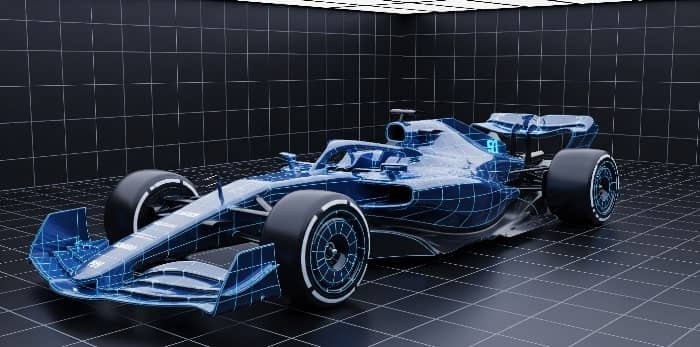
One of the primary goals of the 2026 regulations is to reverse the trend of ever-growing F1 cars. The FIA aims to create a “nimble car” that is smaller, lighter, and more agile on track. This addresses a long-standing complaint from drivers and fans that the current cars have become too large.
- Size Reduction: The cars will be smaller. The maximum wheelbase is being reduced from 3600mm to 3400mm, and the width is being narrowed from 2000mm to 1900mm.
- Weight Reduction: The minimum weight will see a significant drop of 30kg, going from 798kg in 2025 down to 768kg in 2026. This is a crucial step in improving the car’s responsiveness.
The Power Unit Revolution: Hybrid Power and Sustainable Fuel
The heart of the 2026 car is a radically redesigned power unit, which shifts the balance of power dramatically. While the overall output will remain over 1000bhp, the way it’s generated is changing completely to embrace sustainability and electrical power.
- Power Split: The power delivery will be split almost 50/50 between the internal combustion engine (ICE) and the electric motor. The MGU-K’s electrical power will nearly triple to 470bhp (350kW), while the ICE’s power will be reduced to around 535bhp (400kW). The complex and expensive MGU-H component will be removed entirely.
- 100% Sustainable Fuel: In a landmark move for sustainability, the 2026 cars will run on 100% sustainable “drop-in” fuel, meaning it can be used in almost any standard combustion engine. This also allows for lower fuel consumption per race.
Active Aerodynamics: Replacing DRS for Closer Racing
Perhaps the most visible change will be the introduction of active aerodynamics, which replaces the current Drag Reduction System (DRS). This new system is designed to promote closer racing by giving all drivers more control over their car’s aerodynamic profile.
- Movable Wings: Both the front and rear wings will have movable elements, allowing drivers to switch between two distinct modes during a lap.
- Z-Mode: This is the standard, high-downforce setting used for cornering.
- X-Mode: This is a low-drag mode where the wing flaps open up on straights to increase top speed. Unlike DRS, which is only available to a chasing car within one second, X-mode will be available to all drivers in pre-defined zones on the track, reducing the “dirty air” effect and allowing for more sustained battles.
Other Key Technical and Safety Changes
Beyond the headline changes, several other refinements are being made across the car to improve safety, performance, and sustainability.
- Tires: While the 18-inch wheels remain, the tires themselves will be slightly narrower, reducing weight and aerodynamic wake.
- Safety: The chassis and safety structures are being strengthened significantly. This includes a stronger roll hoop, improved side-impact protection, and a more robust front impact structure, all designed to offer greater protection to the driver.
- Raceability: The car’s floor will be partially flat and narrower, reducing the reliance on sensitive ground effect aerodynamics. This is intended to lessen the “porpoising” and bouncing issues seen in 2022 and allow cars to follow each other more closely without losing performance.