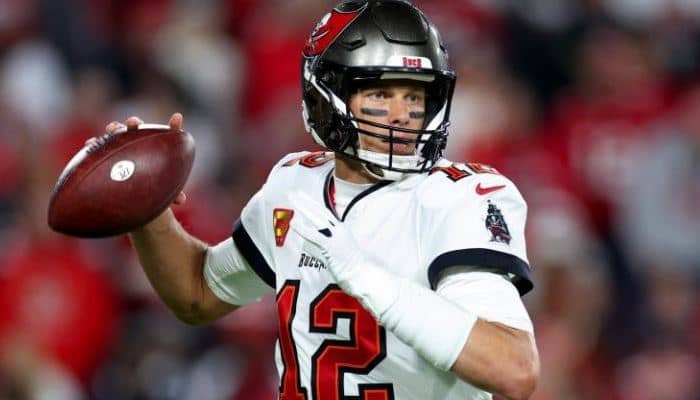
For two decades, Tom Brady was the ultimate protagonist on the football field, a master of his craft who controlled every nuance of the game. Now, he faces an entirely new and arguably more complex challenge: explaining the game to millions from the broadcast booth. As he completes his rookie season as a lead analyst, the seven-time Super Bowl champion finds himself navigating the difficult transition from legendary player to insightful critic.
In recent comments, Brady has outlined his broadcasting philosophy, stating a desire to focus on the positive aspects of player performance rather than engaging in “harsh critique.” This approach has sparked a fascinating debate about the role of an analyst and highlights a timeless challenge for all-time great athletes who step into the media world. Can a player who demanded perfection on the field find the right balance in the booth? This deep dive explores Brady’s broadcasting journey, the “player vs. critic” dilemma, and the immense pressure that comes with being the GOAT behind the microphone.
The Brady Philosophy: A Focus on Positives Over “Harsh Critique”
In a recent interview, Tom Brady offered a clear window into his mindset as a broadcaster. When asked about his approach to analyzing the performance of current players like Patrick Mahomes, Brady articulated a vision centered on elevation rather than condemnation. He expressed a desire to focus on player greatness and explain the intricacies of why a play succeeds, rather than simply tearing down a player after a mistake. “It’s not about this harsh critique,” he explained, signaling a conscious choice to avoid the confrontational, hot-take style of analysis that has become common in some corners of sports media.
This philosophy is understandable for a player who has just recently left the field. Having spent over two decades in the locker room, Brady possesses a unique empathy for the immense difficulty of playing at the NFL level. He understands the split-second decisions, the physical toll, and the mental pressure that players are under on every single snap. From his perspective, highlighting the extraordinary skill required to succeed is a more authentic and insightful form of analysis than simply pointing out an error. However, this approach also presents a significant challenge. Football is a game of mistakes, and a core part of an analyst’s job is to explain why a team is failing, which often requires direct, honest criticism of a player’s performance.
The “Great Player, Great Analyst?” Conundrum
The path from the playing field to the broadcast booth is a well-trodden one, but it is littered with both spectacular successes and notable failures. The assumption that a great player will automatically make a great analyst is a common misconception. While an elite playing career provides an incredible depth of knowledge and instant credibility, the skills required for broadcasting are entirely different. The ability to articulate complex concepts in a clear, concise, and engaging manner for a broad audience is a unique talent.
For every success story like Tony Romo, whose predictive analysis and infectious enthusiasm made him an instant star, there are numerous examples of legendary players who struggled to translate their on-field genius into compelling commentary. The challenge often lies in overcoming the “curse of knowledge.” An athlete as great as Brady may understand the game on such an intuitive level that they find it difficult to break down the fundamentals for the average viewer. His mixed rookie season showed flashes of this dynamic. While he occasionally delivered powerful, emotional insights, particularly when discussing the pressures of the Super Bowl, he often appeared hesitant, struggling to find a consistent rhythm and a distinctive voice. His second season will be a crucial test of his ability to bridge this gap and develop a unique broadcasting style that leverages his unparalleled experience.
The Fine Line: Navigating Criticism and Honesty
The central challenge for Tom Brady moving forward will be navigating the fine line between fair criticism and being overly negative. His stated desire to avoid “harsh critique” is admirable, but it also risks coming across as bland or dishonest if a player or team is performing poorly. Modern sports broadcasting has evolved beyond simply describing the action. The best analysts, like Romo or Cris Collinsworth, elevate the viewing experience by providing a deeper level of understanding. They explain the “why” behind the “what.”
This often requires pointing out a missed block, an incorrect read by a quarterback, or a poorly designed play. The key is to do so constructively. The goal is not to be mean, but to be honest with the audience. Viewers are savvy; they can see when a quarterback makes a “terrible pass.” What they need from an analyst with Tom Brady’s experience is an explanation of *why* it was a terrible pass. Was it a miscommunication? A bad decision under pressure? A failure to read the defense? This is where Brady’s unique insight can be invaluable. The challenge for him is to find a way to deliver this honest, critical analysis without betraying his instinct to protect the players on the field. It’s a difficult balance, but one that the best in the business manage to strike every week.
The Second Season: Can the GOAT Evolve in the Booth?
Tom Brady’s entire career was defined by an obsessive pursuit of perfection and a relentless ability to evolve and improve. He constantly adapted his game to stay ahead of the competition for over two decades. Now, he must apply that same legendary work ethic to his new craft. His rookie season in the broadcast booth can be seen as just that—a starting point. He has now experienced a full season, identified the challenges, and understands the demands of the role.
His commitment to the job appears genuine, and his unparalleled experience remains his greatest asset. If he is willing to embrace the discomfort of delivering honest criticism when it is warranted, and if he can learn to translate his deep, intuitive understanding of the game into compelling insights for the viewer, his potential for growth is immense. The football world will be watching his second season with intense curiosity. The question is no longer whether he was the greatest player of all time, but whether he can apply the same championship mindset to become one of the great analysts of his generation.