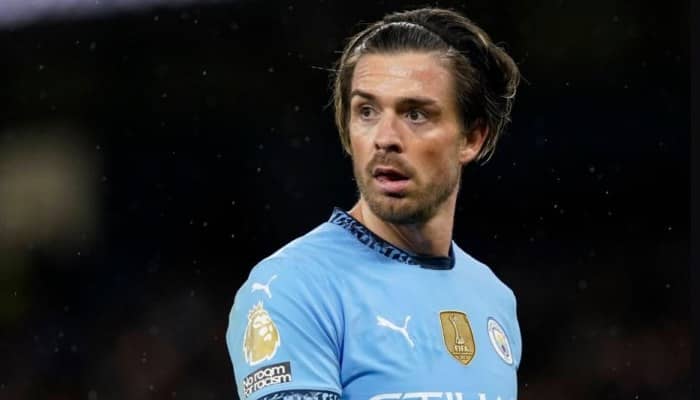
In the world of modern football, a record-breaking transfer fee brings with it an immense weight of expectation. For Jack Grealish, his £100 million move to Manchester City in 2021 was a landmark moment, making him the most expensive British footballer in history. Four seasons later, however, that dream move has reached a critical juncture. After falling down the pecking order under Pep Guardiola, there is a growing acceptance from all parties that a summer transfer is the best path forward. But orchestrating an exit for a player of Grealish’s profile is far from simple.
It is a complex puzzle involving a player seeking career revitalization, a club aiming to recoup a significant financial investment, and the intricate financial realities of the Premier League. This deep-dive analysis explores the highs and lows of Grealish’s time at the Etihad, the motivations behind his desire for a fresh start, and the significant financial hurdles that make his next move one of the most fascinating sagas of the transfer window.
The Weight of a Record Tag: From Villa’s Talisman to City’s System Player
To understand Jack Grealish’s situation at Manchester City, one must first remember the player he was at Aston Villa. At his boyhood club, Grealish was more than just a player; he was a talisman. He was the captain, the creative nucleus, and the flamboyant, free-roaming maverick around whom the entire team was built. He played with a swagger and freedom that made him one of the most exciting talents in English football. His £100 million transfer was a testament to that individual brilliance.
However, moving to Pep Guardiola’s Manchester City required a fundamental transformation. He was no longer the main man but a highly specialized cog in a meticulously engineered winning machine. The off-the-cuff, individualistic style that made him a star at Villa had to be tempered and replaced with tactical discipline, positional awareness, and a relentless focus on ball retention. While he adapted successfully enough to play a key role in the club’s historic treble, it has always felt like a challenging fit—a constant battle between his natural instincts as an individualist and the systematic demands of his manager. This underlying tension has defined his entire tenure at the club.
A Story of Highs and Lows: The Treble-Winning Peak and Subsequent Fall
Grealish’s Manchester City career can be neatly divided into two distinct chapters. The high point was unequivocally the 2022/23 season. During this campaign, he fully adapted to Guardiola’s system and became a crucial component of the team that conquered all before them, winning the Premier League, FA Cup, and UEFA Champions League. He was praised for his intelligence, his ability to control the tempo of games, and his defensive work rate. He had successfully suppressed his inner maverick to become a trusted system player, and he was rewarded with the ultimate team success.
Unfortunately, the seasons that followed have been a story of “one step forward, two steps back.” A combination of recurring injuries and admitted off-field issues have severely hampered his progress and consistency. His form dipped, and with the fierce competition for places at City, he quickly found himself on the periphery. The 2024/25 campaign was particularly difficult, with just seven Premier League starts to his name. Being left out of key matchday squads, including for the FA Cup final, signaled a clear end to his time as a key player. The hero of the treble had become a fringe figure, making a summer move feel not just likely, but necessary for all parties involved.
The Financial Sticking Point: Navigating a £50m Fee and £300k-a-Week Wages
While a mutual desire for a transfer exists, the financial mechanics of any deal are incredibly complex and present the biggest obstacle. Having invested £100 million in Grealish, Manchester City are understandably keen to recoup a substantial portion of that fee, with an asking price reportedly set north of £50 million. While this is half of the original price, it is still a significant outlay for any club in the current financial climate.
An even greater hurdle, however, is his substantial salary, reported to be in the region of £300,000 per week. This level of wages immediately prices out a large number of potential suitors, including many top clubs across Europe. It is this financial reality that makes a loan deal a more plausible scenario. A loan would allow an interested club to acquire Grealish’s services without a prohibitive upfront fee. However, even this option is complicated, as few clubs could afford to cover his full salary. Any potential loan deal, as has been reported in the case of Everton’s interest, would likely be conditional on Manchester City agreeing to subsidize a significant portion of his wages—a concession the selling club may or may not be willing to make.
The Motivation for a Move: A Quest for Game Time and International Glory
For Jack Grealish, now 29, the primary motivation for seeking a new club is the fundamental need for consistent playing time. As a top-level professional, being a peripheral figure is simply not a tenable long-term situation. He needs to be on the pitch, influencing games, and rediscovering the form and confidence that made him a £100 million player. This desire is amplified by his international ambitions.
With the 2026 FIFA World Cup on the horizon, Grealish knows he must be playing regularly at the highest level to force his way back into the plans of the England national team. He is keen to stay in the Premier League and ideally wants to play for a club competing in the UEFA Champions League, as this provides the biggest platform to showcase his talents. This ambition effectively narrows his list of potential destinations, as only a select few clubs can offer the combination of elite-level competition and the financial muscle required to broker a deal with Manchester City.